

A Logo Is Bought Once. A Name Is Bought Again.
A logo is paid for one time. A name is paid for again every time somebody new sits in that seat. So put the name on only when a stranger has to say it out loud. If nobody is going to address the wearer by name, the logo is the whole mark and the name is a cost with no reader.
A stranger decides whether the name is worth paying for
The name goes on the shirt only when somebody outside your company has to use it, and that holds at any headcount. A name exists for the person on the other side of a counter, a desk or a job site who needs to flag the wearer down and say something to him. That person is the test. If he does not exist, the name has no reader and you are paying to print something nobody is going to use.
Field crews, front desks, service techs, servers and anybody a customer has to get the attention of: the name earns its place. Office staff, a conference team, a golf tournament, a client gift, an internal department: it does not. The second group already knows every name in the room, and the outsiders they meet are never going to use one.
The ruling
Put the name on only when a stranger has to say it out loud. Everywhere else, the logo is the whole mark.
When the name earns its place
Field crews, front desks, service techs, servers, and anyone a customer has to flag down in person.
When the logo is the whole mark
Office staff, a conference team, a golf tournament, a client gift, an internal department.
The two shirts under this decision: the PILLAR David Polo at $76, the solid staple, and the PILLAR Steven Polo at $76, the print.
The customer at the counter is the only person who reads it
The customer is the only reader a name really has, and that customer is not standing near every team. Think about the two marks as two different reading jobs. A logo gets read at distance, by anybody who looks, with no effort and no reason required. A name gets read at arm's length, by one person at a time, and only when that person has a reason to use it. Those are not the same purchase, even though they land on the same shirt in the same order.
So the question is not whether a name looks sharp. It is whether anybody standing near the wearer needs it. If the people around him already know who he is, the shirt is announcing something they knew before he walked in. Scale settles it: a logo works across a room, a name works across a handshake.
A logo is read by everybody and costs the reader nothing. A name is read by one person, up close, and only if that person has to use it out loud.
The person running your order can put a different name on every shirt
Yes, this is a thing you can buy, and you can buy it from us. Our own print shop will put a different name on every shirt in the run, and our page on custom embroidered polos for companies and golf carries a section on name and title personalization that answers the capability question directly.
That settles whether it can be done, which is not the question you came in with. The question is what a name does to everything after the first order. Capability is cheap to confirm and it tells you nothing about whether you should.
| The question | Logo only | Logo plus a name |
|---|---|---|
| The count you order | A size run anybody on the team can wear | A shirt assigned to a person before it ships |
| The day somebody leaves | The shirt goes back to the stack | The shirt goes to a bin |
| The second order | The file on record runs again | A new list has to be produced and checked |
| Who can wear it | Whoever fits it | One person |
The man who leaves takes a shirt nobody else can wear
A logo only shirt is inventory and a named shirt is not. When somebody leaves, a logo only Large comes back to the stack and the next hire wears it. A named Large comes back and stops being a Large, because the mark on it points at one person who is no longer there.
On a team with real turnover that changes what you are buying. You are not buying shirts, you are buying shirts per person per year, and every name you add pulls one more garment out of the pool the next person draws from. The cost is flexibility, not a line item. What to do with stock you are taking out of circulation is a separate argument and it lives in our piece on apparel after a company rebrand, and the size run itself is argued in our guide to sizing a company polo order.
A logo only shirt returns as a size. A named shirt returns as one man's size, and the name is the reason it cannot be issued again.
The shirt comes back folded and perfect, with the name of a man who no longer works here stitched into it.
Here is what a shared asset looks like: one shirt, two colorways, wearable by whoever fits it. Both sit in the men's polo collection.
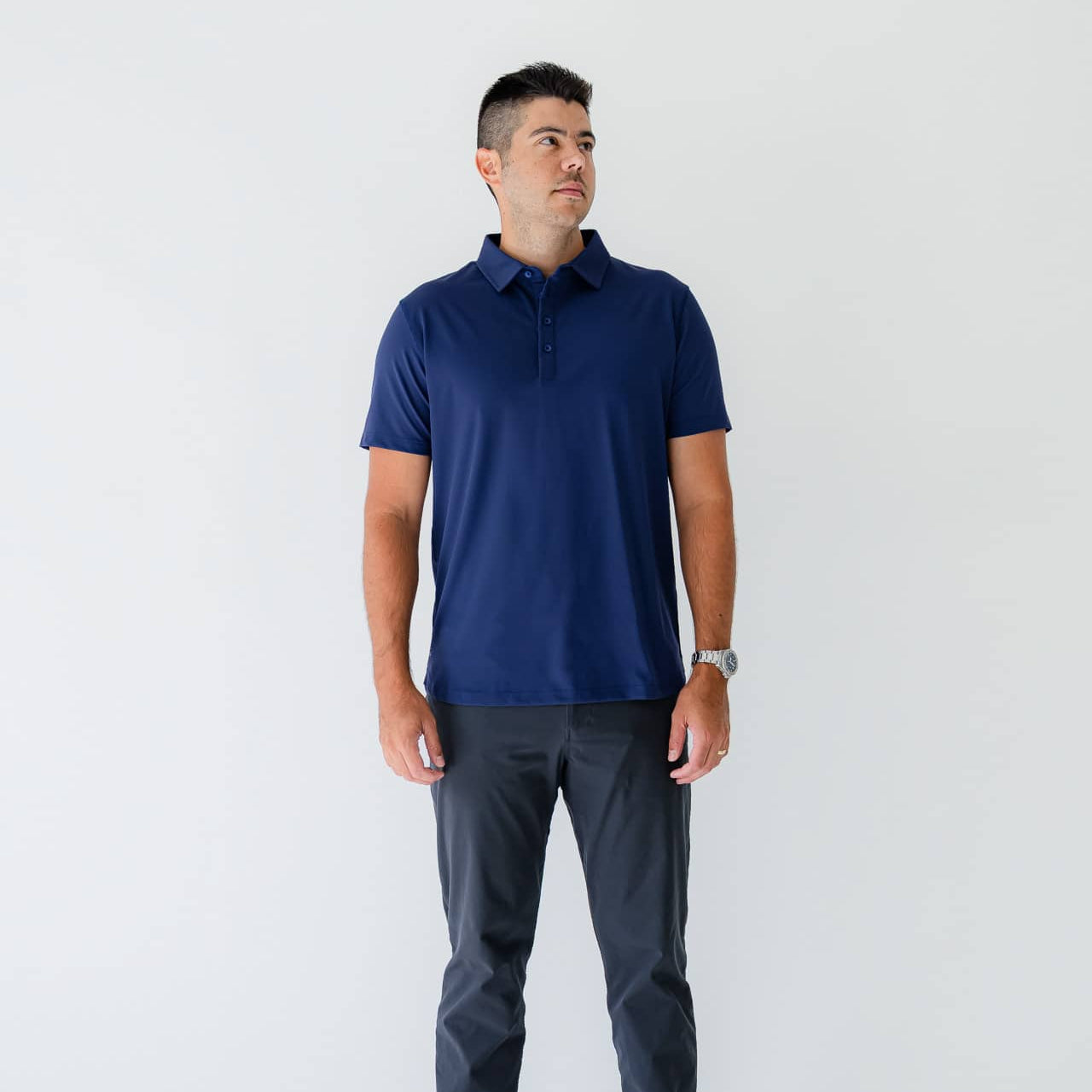
David Polo, Navy
84 percent nylon, 16 percent spandex, four-way stretch, sweat-wicking. Classic athletic fit with a firm collar that holds its shape, a U-cut hem and a pre-shrunk body.
The solid staple. Logo it once and it keeps working through every hire after this one.
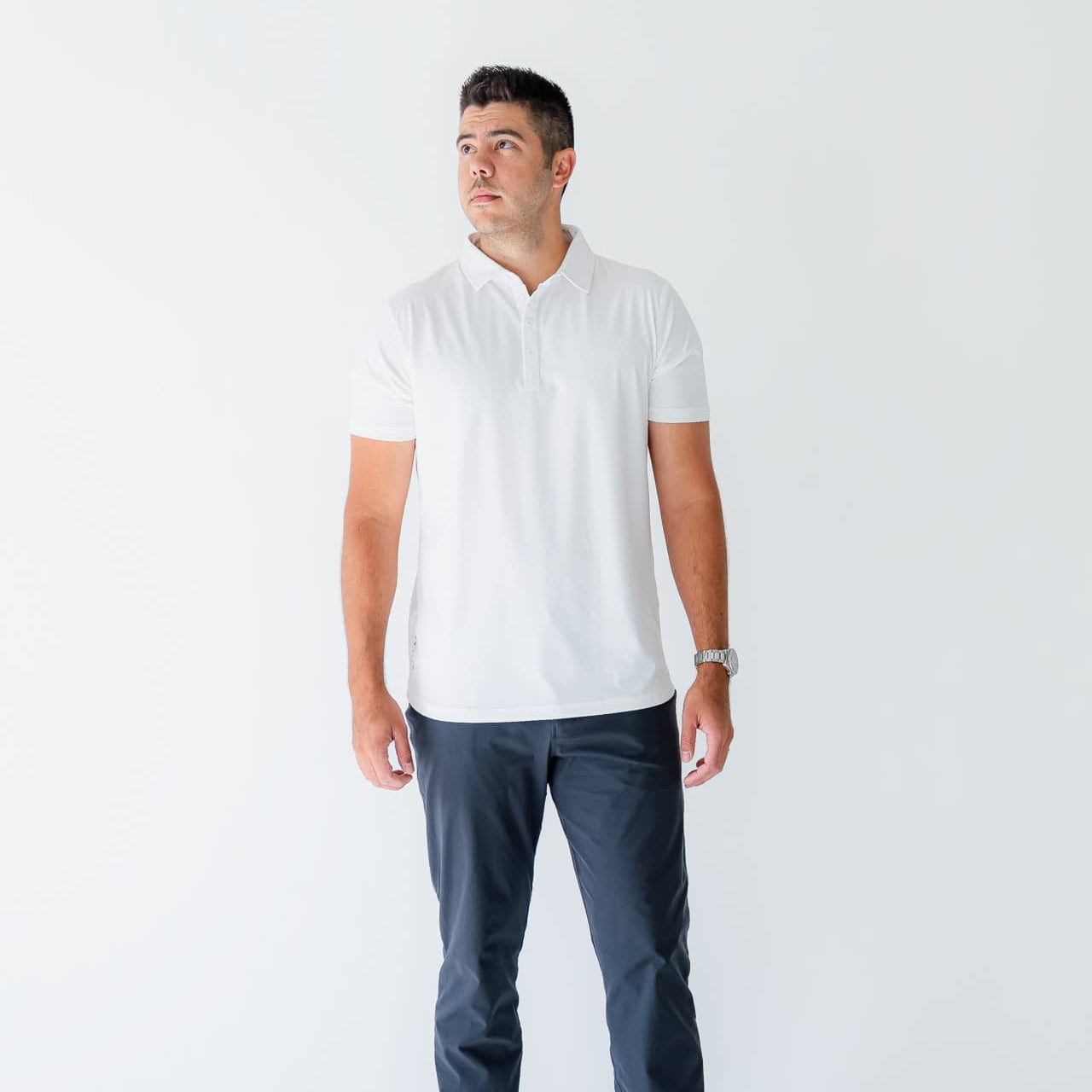
David Polo, White
84 percent nylon, 16 percent spandex, four-way stretch, sweat-wicking. Classic athletic fit with a firm collar that holds its shape, a U-cut hem and a pre-shrunk body.
The same shirt on a lighter ground. Order it as a size run, not as a set of people.
Navy and white together, six sizes, one click
Both David Polo colorways in the cart for $152.00. Pick the size and the pair loads.
Whoever places the second order is working from a list, not a number
A logo is set once and inherited after that, while a name has to be collected again for every run. The artwork goes on record and the next order reuses it with nothing to re-gather. Names are new data every time, which means somebody has to produce a correct list on the day the order goes in.
A list is not a number. A list has a spelling problem, a nickname problem and a person who started last week. That work does not get easier with practice, because the list is different on every run. Our write up on building a tech pack covers the document a run works from, including the page where label and tag detail gets recorded. Who holds those files afterward is its own argument and we made it in the piece on who owns the files behind your company apparel, and packing a box by name is a different job entirely that belongs with gifting apparel on an incentive trip.
The name he actually goes by, spelled the way he spells it, a size beside it, and a ruling on the person who starts after the order is placed.
The person who approves the proof starts a clock that runs 7 to 10 business days
A logo added to garments already on a shelf runs 7 to 10 business days from proof approval, which is the figure stated on our custom embroidery page. That short clock is the most useful fact in this entire decision, because it means names do not have to be in the first order at all.
Order the base run with the logo only. Get the shirts in the building, put them on people, and watch who actually gets called by name by somebody who does not work with him. Then run the names later as a smaller second pass on just those people. You buy the information before you buy the commitment, and the shirts are on bodies the whole time.
The buyer who starts from fabric gets to put the name inside the garment
A garment built from the fabric up runs about 45 days door to door, and that clock is stated on the fully custom apparel path. On that path the name question changes shape, because the interior of the garment is being specified anyway. Private label neck tags, trim and detail work are real options once you are building the shirt rather than decorating one.
A built garment starts as a document, and that document has a page for labels. If a name is going to live with the shirt for the life of the shirt, that page is the honest place for the conversation rather than something added after the shirts land.
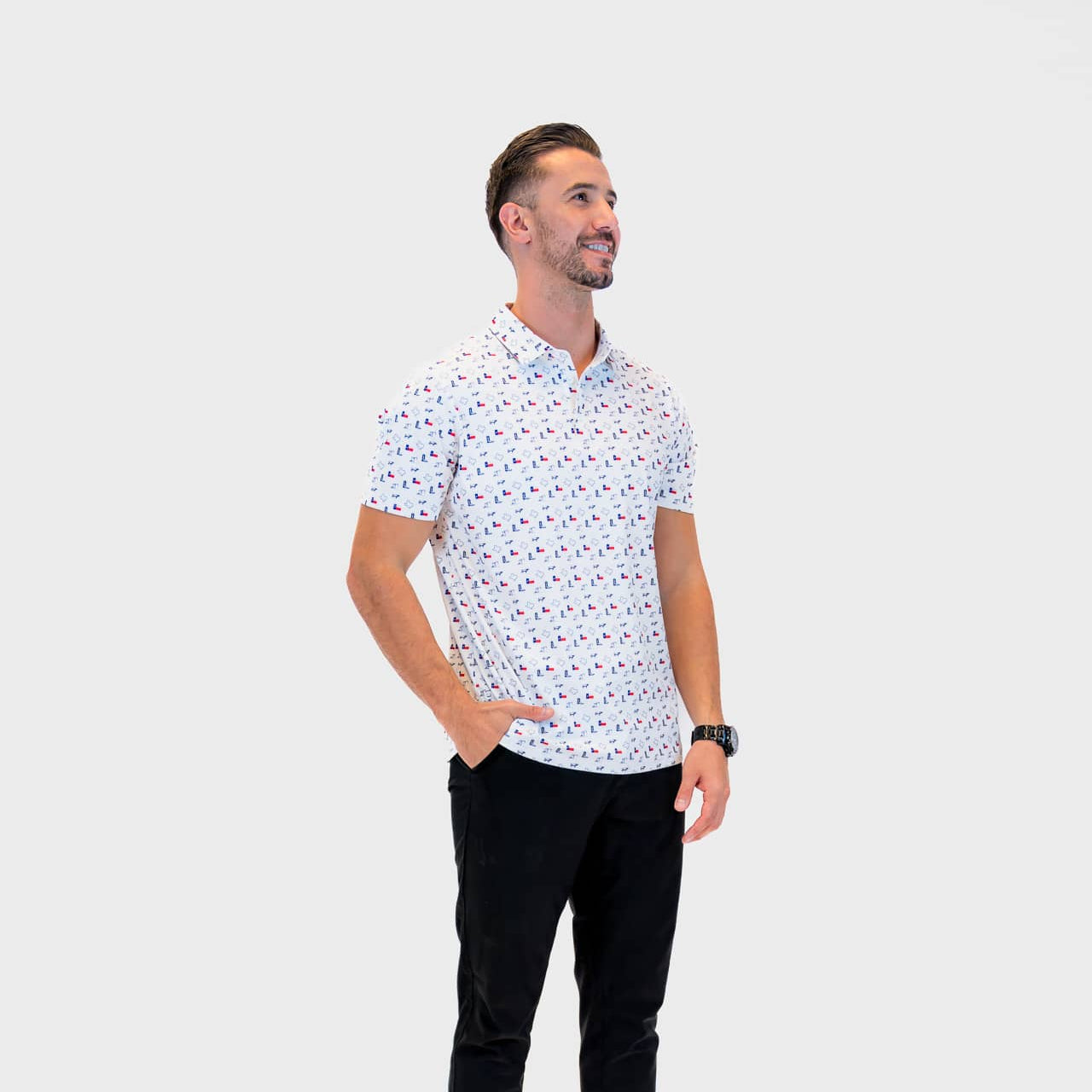
Steven Polo, Texas print
88 percent polyester, 12 percent spandex, cooling sweat-wicking textured knit, four-way stretch. Classic athletic fit with a U-cut hem and a pre-shrunk body.
This is the other half of the argument. A print is the shirt a man picks for himself, which is exactly why it reads as his and not as the company's.
Nobody can tell you these four numbers before the job exists
Four things cannot honestly be handed to you before there is a garment, a list and a date on the table. Three of them are below, and the fourth is a policy on changing a name after a proof has been approved, which depends entirely on where the run has already gone by the time you ask.
- The chargeA per name charge
- The minimumA minimum quantity for a personalization run
- The stitch countA stitch count for a name
A vendor who answers those confidently before seeing the garment, the list and the date has guessed. The one number we publish before a job exists sits on the artwork requirements page, which also states the form your logo file has to arrive in.
Questions buyers ask before the order goes in
Should company shirts have employee names on them?
Only when somebody outside the company has to say the name out loud. Field crews, front desks, service techs and servers get real use out of it. For office staff, a conference team or a client gift, the logo is the whole mark and the name is a cost with no reader.
Does adding a name cost more than adding a logo?
The cost that matters is not the one on the invoice. A logo is set up once and every later order inherits the file, while a name is new work and new data on every single run. We will not quote a per name charge in a blog post, because that figure depends on the garment, the list and the date.
Can every shirt in one order have a different name?
Yes. Every polo in a run can carry a different name. That is a capability rather than an answer, though, because the real question is what a named shirt does to the count you order and to the order after this one.
What happens to a named shirt when that employee leaves?
It stops being inventory. A logo only shirt goes back to the stack and the next hire wears it. A named shirt goes to a bin in perfect condition with somebody else's name on it, and that is the cost that never shows up on a quote.
Do you need the names before you place the order?
No. Order the base run with the logo only, get the shirts in the building, then run names as a smaller second pass on the people who turned out to need them. The clock on added decoration is short enough that waiting costs you almost nothing.
How long does it take to add a logo to company polos?
Adding a logo to garments already on a shelf runs 7 to 10 business days from proof approval. A garment built from the fabric up is a different path and runs about 45 days door to door. Confirm either one against your own date before you promise it internally.
Is a name better embroidered or printed?
That gets decided by the garment and the job, not by a rule you can apply in advance. The method follows the fabric and the size of the mark, which is why it is settled on the specific run. Send the garment, the list and the date through the quote form and you will get a straight answer for your order.
A logo outlasts every man who wears it.
Tell us the garment, the headcount and the date, and you will get a straight read on whether the names are worth paying for on your team.
Both clocks in this post are planning targets, confirmed against your garment, your list and your date on a call.
