

The Proof Waits for the Next Meeting
Approving a proof costs nothing. Waiting for the room that is allowed to approve it can cost five weeks, and five weeks is the difference between two products and one. The production clock starts at proof approval, so on an association order the board calendar sets the delivery date and the vendor does not. Logo decoration on stock garments runs 7 to 10 business days from proof approval, and a garment built from the fabric up runs about 45 days door to door. The decorated stock polo survives a missed meeting. The fully custom build does not.
The PILLAR David Polo and the PILLAR Steven Polo at $76 are stock garments, so decoration clears a February 18 2027 annual meeting from either board meeting, while the garment built from the fabric up clears it only from the December one.
- Proof approved Tuesday December 8 2026, decorated stock polos land about Tuesday December 22 2026. Clears the event with eight weeks to spare.
- Proof approved Tuesday December 8 2026, a garment built from the fabric up lands about Friday January 22 2027. Clears the event.
- Proof approved Tuesday January 12 2027, decorated stock polos land about Wednesday January 27 2027. Still clears the event.
- Proof approved Tuesday January 12 2027, a garment built from the fabric up lands about Friday February 26 2027. That is eight days after the annual meeting. It does not clear.
01The room that approves this cannot be moved to suit your order
The person who was told to get a quote is not the person who can say yes. A board or an executive committee says yes, and that body meets on a fixed calendar that will not move for an apparel order. So stop aiming at the meeting. Aim at the agenda deadline, which lands before the meeting does, and treat that as the real date on the project.
What has to be finished by then is the artwork and the garment decision. Those are decisions, not production, and they are the two things you control outright. Settle them, get the proof in front of the body that can approve it, and read the four steps an order actually moves through so you know which step you are driving and which one you are waiting on.
02A member cannot be told what to wear
Nobody can require a member to wear anything. A member is not an employee, there is no policy to point at, and no manager in the room has standing to enforce one. So the garment has to be good enough that he puts it on without being asked. That is a specification problem, not a compliance problem.
It is the same mechanism behind the company shirt that stays in the drawer, and the problem is worse when there is no employer in the room at all. So specify a shirt a man would buy for himself. The PILLAR David Polo is 84 percent nylon and 16 percent spandex, four way stretch, sweat wicking, classic athletic fit, a firm collar that holds its shape, a U cut hem, pre shrunk. At $76 it is the garment the association mark should live on, in Navy or in White.
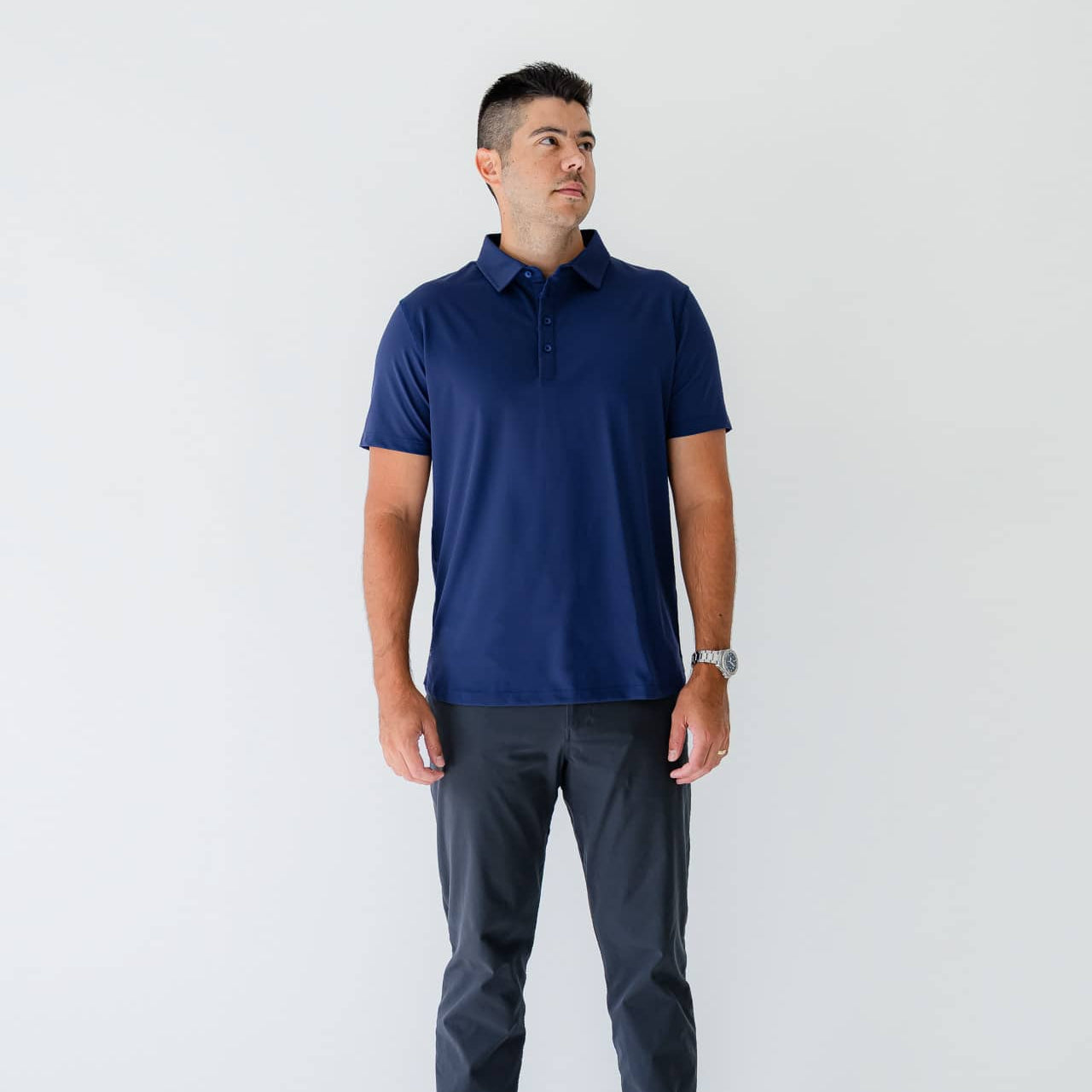
PILLAR David Polo, Navy
$76
84 percent nylon, 16 percent spandex, four way stretch, sweat wicking, classic athletic fit, firm collar that holds its shape, U cut hem, pre shrunk. The default chest for the association mark.
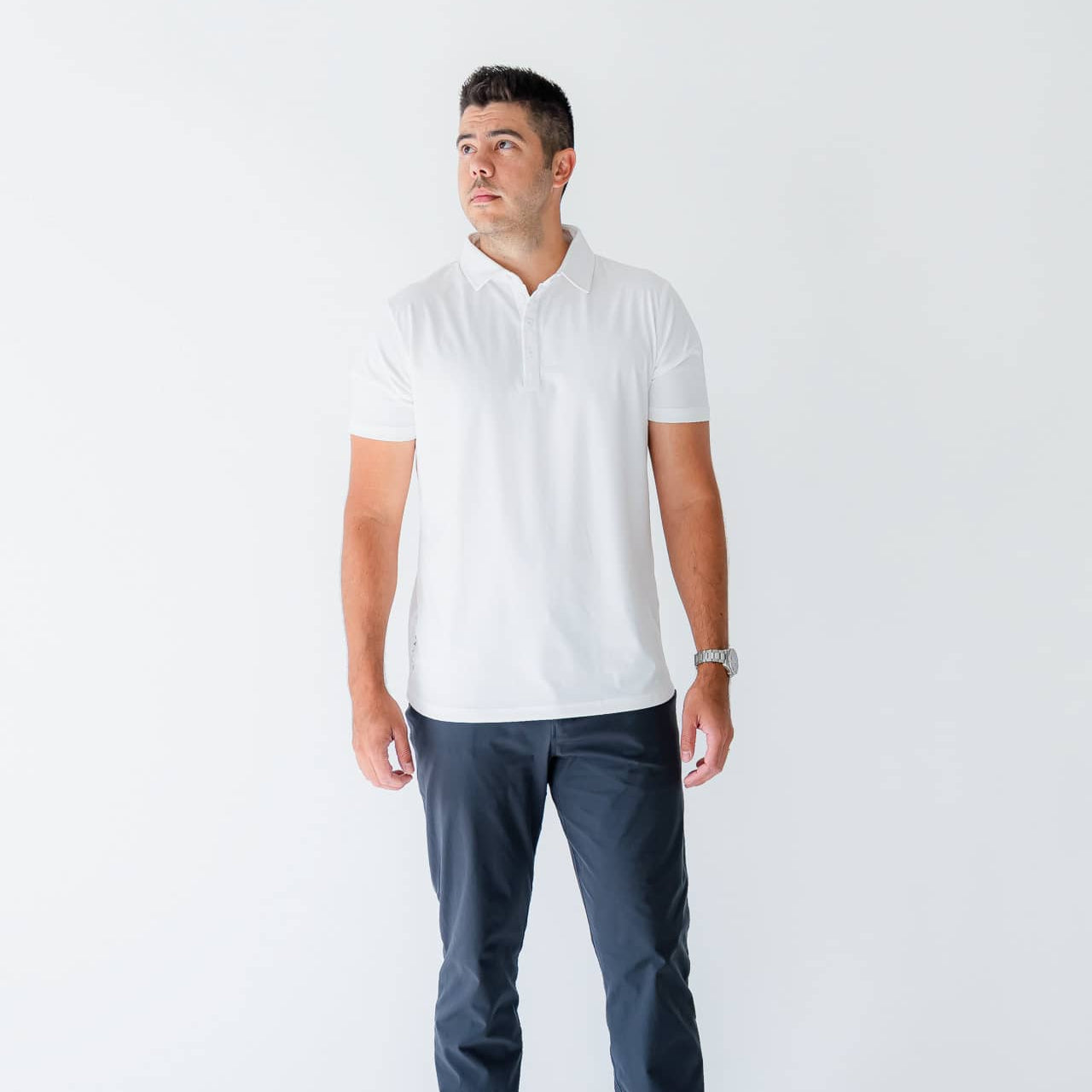
PILLAR David Polo, White
$76
84 percent nylon, 16 percent spandex, four way stretch, sweat wicking, classic athletic fit, firm collar that holds its shape, U cut hem, pre shrunk. The same garment in the White colorway.
03You cannot read a size curve off a membership list
An employer orders against a payroll. An association has a membership list, and a membership list does not tell you who will be standing at the registration table on the day. Order against the people who work the events, by name. The volunteer who runs registration every year. The two officers who cut the ribbon. The people who work the booth at the regional expo.
Those names give you the sizes. Everyone else is a separate decision, made later, on its own terms. The question in front of you is which sizes, not how many of each, and you answer it by naming people instead of counting heads. Sizing on the polos this program is built on runs Small through XXXL, so the range is already there once the names are.
04One mark cannot have the chest to itself
The members already own logos. Some of them compete with each other. The association mark goes on the chest, and a member's own company mark often sits on the same garment or on the one he wore yesterday, so the association mark has to read small and it has to survive sitting next to something else. That rules out a mark that depends on fine detail to be recognized.
Decide it once. One mark, one stitch file, and every later order inherits that file, which is the only reason the third order looks like the first. Before anything is sent, read the file your logo has to arrive as. What the setup for a stitch file involves is on that page, and that is where to settle it.
05The clock cannot start before somebody signs the proof
Nothing is produced while a proof sits unapproved. A logo stitched onto polos already on the shelf runs 7 to 10 business days from proof approval. That figure belongs to decoration on stock garments and to nothing else.
The second clock is a different animal. A polo cut and finished to a spec you set runs about 45 days door to door, because the fabric has to exist before anything can be cut from it. Both clocks start on the same signature, and neither one starts a day earlier.
The proof is ready on a Wednesday and nothing happens to it until a Tuesday.
Take an annual meeting on Thursday February 18 2027 and a board that meets on the second Tuesday of the month. Approve at the December meeting, Tuesday December 8 2026, and decorated stock polos land about Tuesday December 22 2026, clear of the event by eight weeks. The garment built from the fabric up lands about Friday January 22 2027, also clear.
Miss December and the proof is approved at the January meeting, Tuesday January 12 2027. Decorated stock polos land about Wednesday January 27 2027 and still clear. The garment built from the fabric up lands about Friday February 26 2027, eight days after the annual meeting. So the custom build died at the December meeting, not at the January one, and the option closed before anybody in the room noticed it had.
Approved Tuesday December 8 2026, decorated stock polos
About Tuesday December 22 2026
Clears the event with eight weeks to spare.
Approved Tuesday December 8 2026, built from the fabric up
About Friday January 22 2027
Clears the event.
Approved Tuesday January 12 2027, decorated stock polos
About Wednesday January 27 2027
Still clears the event.
Approved Tuesday January 12 2027, built from the fabric up
About Friday February 26 2027
Eight days after the annual meeting. It does not clear.
06A missed meeting cannot be bought back with a rush fee
A rush fee compresses decoration, and decoration is all it compresses. It does not compress a loom and it cannot un-miss a meeting, so PILLAR will not promise a garment built from the fabric up against a proof approved at the January meeting for a February 18 2027 event. Put that same question to anyone bidding the job, because it is one of the questions worth asking before you sign.
07The cold end of an outdoor event cannot be solved by the polo
A ribbon cutting is outdoors. So is the golf outing, and so is the hour at the registration table before anyone else arrives. The polo is the garment the mark lives on, and a layer goes over the mark, which means the layer has to carry the mark too or the mark is gone for the cold half of the day.
The PILLAR Kevin Vest in Black, $78, is the layer that keeps the chest mark visible, which a quarter zip and a jacket do not. The quarter zip earns its place on warmth, and what you put under a quarter zip decides whether it works at all. The PILLAR Alec Quarter Zip, $98, is the Blue one.
For the golf outing itself, where a member is a guest rather than on duty, the shirt is the PILLAR Steven Polo in the Floral print, $76. It is 88 percent polyester and 12 percent spandex, a cooling sweat wicking textured knit, four way stretch, classic athletic fit, U cut hem, pre shrunk. A golf outing also puts your delegation alongside the club's own staff, who are dressed by a separate apparel program we wrote up on its own. Your people should not read as theirs.
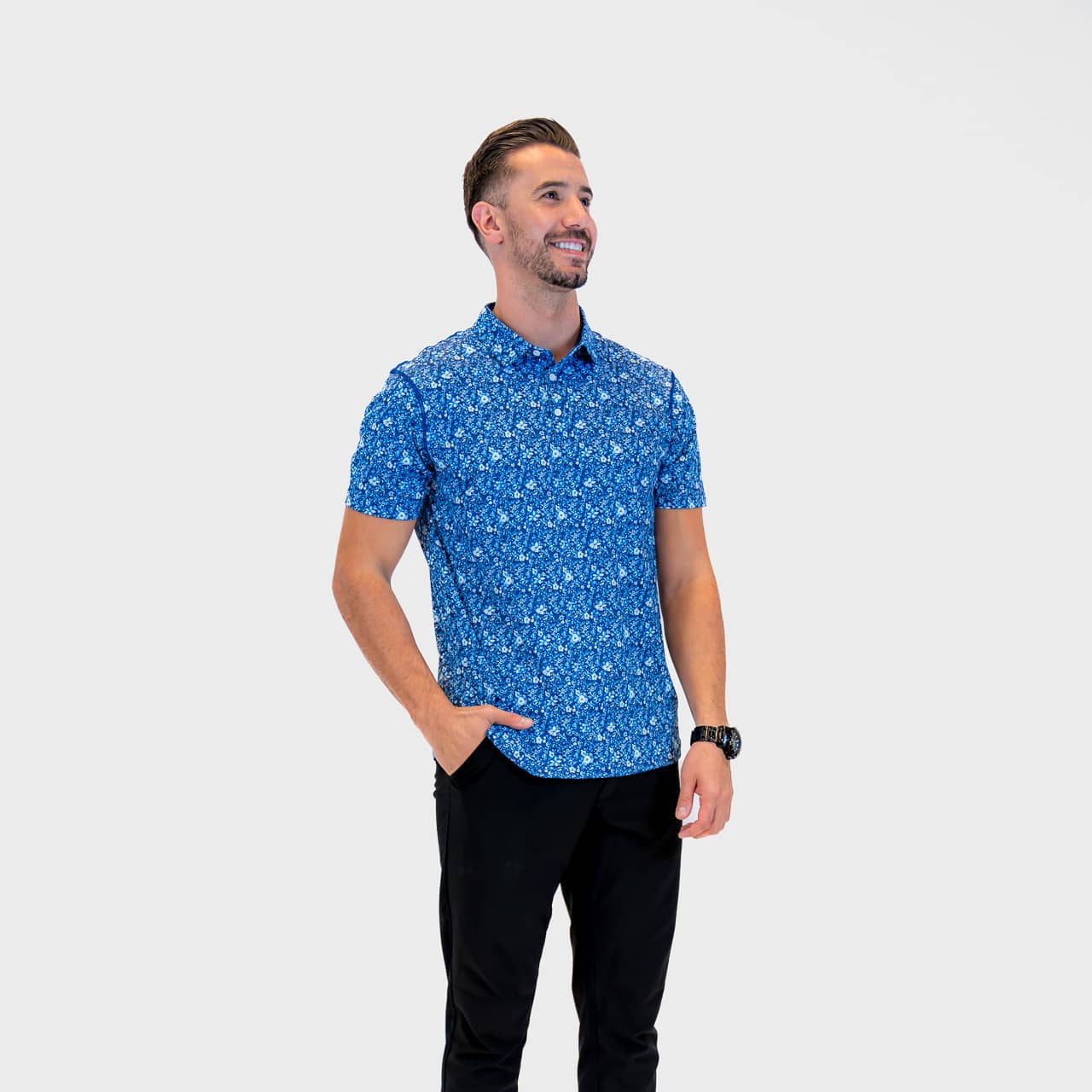
PILLAR Steven Polo, Floral print
$76
88 percent polyester, 12 percent spandex, cooling sweat wicking textured knit, four way stretch, classic athletic fit, U cut hem, pre shrunk. The golf outing shirt, for the day a member is a guest rather than on duty.
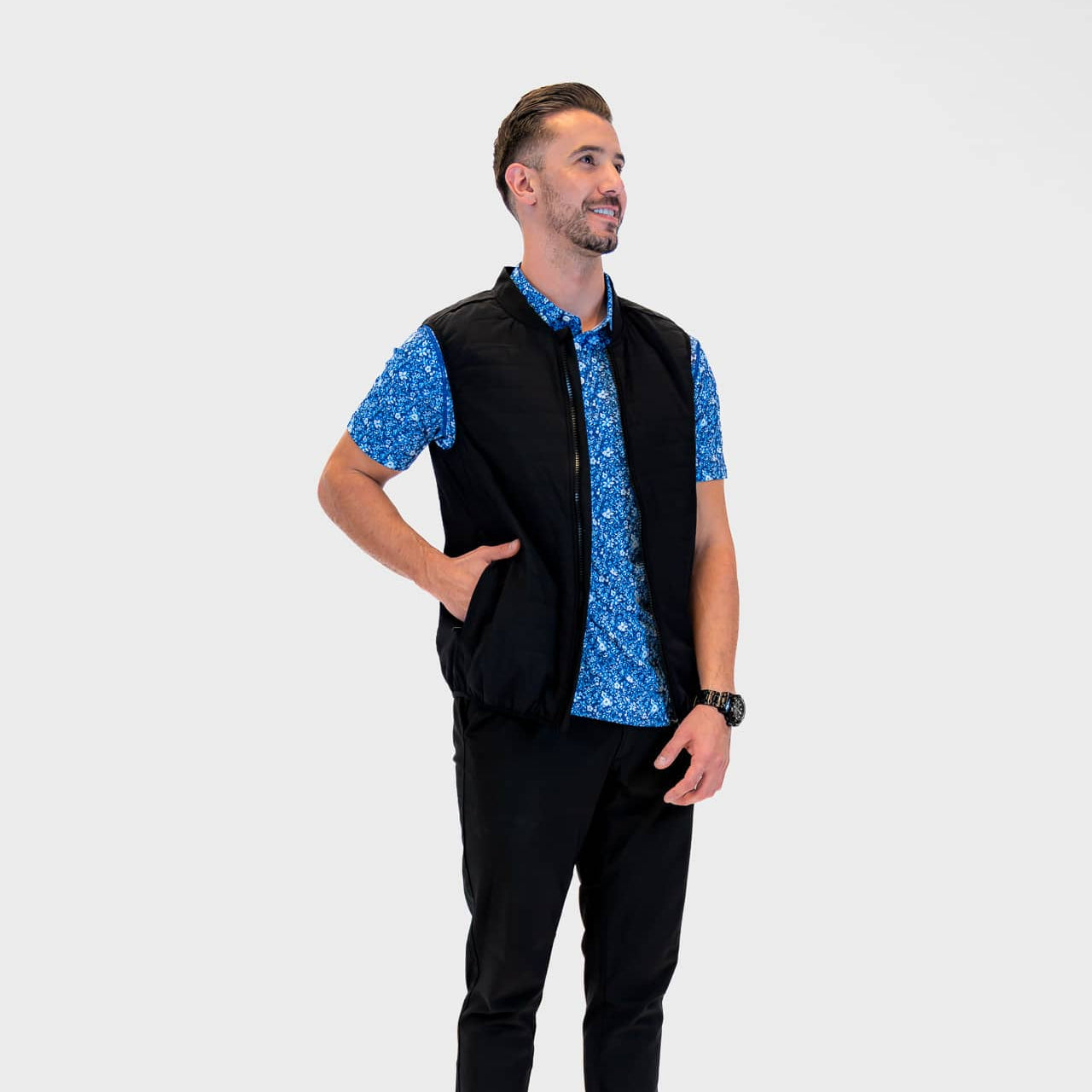
PILLAR Kevin Vest, Black
$78
The layer that keeps the chest mark visible when the morning is cold. A quarter zip covers the mark and a jacket buries it. This does neither.
08A shirt nobody has paid for cannot be counted on to show up
Somebody has to pay. Some associations buy the shirts outright and some let members buy their own, and the two models produce different programs and different clocks. We are not going to re-argue that choice here, because we published our own piece on running a store against running a drop and it is the better read on it.
The point that is ours is narrower. Set the garment standard before you set the model. Decide the garment, the mark, the stitch file and the sizes, and only then decide who pays for them. Do it the other way around and the mark arrives in four sizes on four different shirts, because nothing in the process ever told anybody which one was right.
The polo and the vest together, $154
The PILLAR David Polo in Navy and the PILLAR Kevin Vest in Black, one link per size. $154 is the two prices added together.
Questions worth settling first
1
Who approves a chamber or trade association apparel order?
A board or an executive committee approves it, not the person who was told to get a quote. That body meets on a fixed calendar, so the real deadline is the agenda deadline that falls before the meeting. Have the artwork and the garment decision finished before the agenda closes.
2
How long does branded apparel take when a board has to approve the proof?
Count from proof approval, not from the day you ask for a quote. Logo embroidery or printing on stock garments runs 7 to 10 business days from proof approval, and a garment built from the fabric up runs about 45 days door to door. Add the wait for the next meeting to whichever number applies.
3
Can association members be required to wear the apparel?
No. A member is not an employee and there is no policy to point at, so the garment has to be good enough that he wears it without being asked. That is why the specification matters more on an association order than on a staff order.
4
Should the association buy the shirts or should members buy their own?
Both models work and they produce different programs and different clocks. We published a separate piece on running a company store against running a bulk drop, and that is the place to settle it. Whichever one you pick, set the garment standard before you set the model.
5
How many sizes should an association order when the wearers are not employees?
Order against the people who work the events, by name, rather than against the membership list. A membership list does not tell you who will be standing at the registration table on the day. The PILLAR David Polo and the PILLAR Steven Polo run Small through XXXL, so the range is there once you have the names.
6
What goes on the chest when the members already have their own logos?
The association mark, decided once and stitched from one file. Members own logos of their own and some of them compete with each other, so the association mark has to read small and has to survive sitting next to another mark on the same garment. One mark, one stitch file, and every later order inherits it.
7
What is the difference between embroidering stock polos and building a custom garment?
One decorates a garment that already exists and the other makes the garment first. Embroidery or printing on stock polos runs 7 to 10 business days from proof approval. A garment built from the fabric up runs about 45 days door to door, which is the option a missed board meeting takes away.
Two meetings is one meeting too many.
Send the artwork and the garment decision now, so the proof is sitting in front of the board the first time it meets.
