

Can You Iron a Golf Polo?
01
No, and what you lose does not come back
The iron is not going to melt the polyester. It is going to kill the spandex, and the spandex is the part you actually paid for. So the answer is no, do not iron a golf polo.
No. A performance polo is a stretch knit, and an iron is the one tool in the house that takes the stretch out of it and does not give it back.
Both shirts in this post are $76. The PILLAR David Polo is the solid staple, 84 percent nylon and 16 percent spandex, four way stretch, sweat wicking, classic athletic fit, a firm collar that holds its shape, U cut hem, pre shrunk, in Navy, Black and White. The PILLAR Steven Polo is the print polo, 88 percent polyester and 12 percent spandex, a cooling sweat wicking textured knit, four way stretch, classic athletic fit, U cut hem, pre shrunk. Both are pre shrunk knits, and that is the whole reason neither one is a pressing job.
Here is what is strange about this question. Search it and you get a wall of general home laundry advice, all of it written as though the shirt in your hand were plain polyester. Plate down, low setting, press cloth, go. That advice is not wrong about polyester. It is just answering a question about a garment you do not own.
A performance polo is not a cotton shirt with better marketing, and it is not a polyester shirt either. It is a knit with elastane running through it. The elastane is the minority fiber by weight and close to all of the shirt by function. It is why the thing moves when you move, why it holds its shape across eighteen holes instead of bagging out by the turn, and why it goes back to its own dimensions after a wash. It is also the single most heat sensitive fiber in the garment. Every page telling you how to iron polyester is watching the wrong fiber.
So the ruling is flat. Put the iron down. Then read the next section, because the reason matters more than the ruling and it changes how you treat every stretch garment you own.
02
The spandex gives out first, every time
Rank the fibers in the shirt by heat tolerance and the whole argument resolves itself. PILLAR has already published that ordering in its breakdown of nylon against polyester for polos, and the short version is this: both base fibers soften well below the point at which they melt, and the spandex blended through the knit is more heat sensitive than either base fiber. The fiber that sets the limit is not the polyester. The minority fiber sets the ceiling for the entire garment, which is the part nobody writing about ironing polyester seems to have noticed.
That is a useful thing to understand because it explains why the usual safeguards fail. A press cloth protects a surface. It does not change the temperature of the fabric underneath it, and the elastane is not on the surface, it is distributed through the knit. Turning the shirt inside out does the same amount of nothing for the same reason. Heat gets in, and the most delicate fiber in the blend meets it first.
You will notice there is no dial setting anywhere in this post. PILLAR has not tested a temperature on these garments, so putting a number here, a safe setting, a melting point, a count of wash cycles survived or a durability figure, would be a guess wearing the costume of a measurement. The order of the fibers is the honest answer and it is the more useful one, because it holds no matter whose iron you are standing over in whose kitchen. A ranking you can trust beats a figure somebody invented. For the same reason the dryer is not your friend either, which the performance care guide covers properly.
03
Heat takes the recovery out permanently
Cooked elastane does not look cooked. That is the entire problem, and it is why this mistake keeps getting made by men who are otherwise careful with their clothes. There is no scorch mark, no shine, no stiff patch, no hole. The shirt comes off the board looking better than it did going on, flat and clean and sharp at the placket. You hang it up pleased with yourself.
What has gone is recovery. Elastane works because it stretches and then pulls back, and heat is the thing that takes the pulling back away while leaving the stretching behind. A shirt in that condition still gives when you reach. It just does not return. So the sleeve that used to sit against your arm starts standing away from it. The hem that used to hold its line starts to wave. The body that used to skim starts to hang. None of that shows up on day one. It shows up on the third wear, by which point the iron is a week in the past and the shirt simply reads as cheap.
That delay is why the advice circulates so freely. The feedback loop is broken. A man irons a polo, sees a crisp shirt, concludes that ironing a polo is fine, and tells his friends. The damage lands later and gets blamed on the brand. Worth saying plainly: this is not a wear and tear failure, it is a one time, permanent change to the fiber. One pass with a hot plate can do it, and no amount of careful washing afterwards brings the shirt back.
Pressing a performance polo flat is how you take the stretch out of it for good.
04
A knit lets a crease go on its own
The better question is why you are pressing a knit in the first place, because a knit does not hold a crease the way a woven shirt does. A dress shirt is woven, which means it has a grain, two sets of yarns crossing at right angles under tension. Fold it and the fold lands along that structure and sets into it. The grain remembers. That is why a woven shirt genuinely needs pressing, and why a pressed woven shirt stays pressed.
A knit is not built that way. It is one yarn looped through itself, over and over, and a loop has no grain to set a line into. When a polo comes out of a suitcase with a mark across the chest, that mark is being held by the loops, not pressed into them. Nothing has been deformed. The fabric is just sitting in a shape it was squashed into, and the moment it relaxes, usually with a little weight, a little moisture or a little body heat, it goes back to its own shape by itself. You are not fixing a crease in a polo. You are waiting one out, and the shirt does the work.
Pre shrinking is the other half of this. A pre shrunk knit has already been through the relaxation it was going to go through, so it has a shape of its own to return to rather than a shape you have to pull it back into. Both the David and the Steven are pre shrunk, and both are knits. That is not a care note buried on a hang tag. It is the reason the question in the title dissolves instead of needing an answer.
05
Steam leaves nothing behind
Do this instead, in this order. Water and gravity will take a crease out of a knit with nothing touching the fabric, which is exactly what you want, because an iron works by contact and pressure and those are the two things that hurt the shirt. Steam is heat with no plate behind it, and a damp shirt on a hanger is the lowest effort version of the whole method. Everything below is ranked, fastest and best first.
1
Hang it damp
Straight out of the wash onto a hanger, no dryer in between. The weight of the water pulls the knit straight as it dries. This is the one to do the night before a round.
2
Shower steam
Hang it on the back of the bathroom door while you shower. Close the door, give it the whole shower, and walk out with a shirt that has relaxed on its own.
3
Steamer held off
A handheld steamer works, but held away from the fabric rather than against it. The steam does the job in the air. Resting the head on the knit turns it into a small iron.
4
Pull while damp
With the shirt damp, pull the hem down gently and run the placket between your fingers. Light tension, no yanking. The knit takes the line you leave it in.
5
Roll, never fold
Pack it rolled. A fold is a line and a roll is a curve, and a curve has no edge for the loops to hold. This is prevention, so it ranks last and matters most.
If you only take one of those, take the first. Washing a polo the night before and hanging it wet is less work than ironing it and the result is better, because you get a shirt that has settled into its own shape rather than one that has been flattened into yours. The steamer earns its place on the list but it is the one with a way to go wrong, so hold it off the cloth and keep it moving.
06
A hotel room sorts this out overnight
It is nine at night, the shirt is out of the bag with a fold across the body, the tee time is early and there is an iron bolted to a board in the closet and no steamer anywhere. Ignore the iron. The bathroom is the better appliance and it is already installed.
Hang the polo on the shower rail or the back of the door, well clear of the spray, then run the shower hot with the door shut and the fan off. Take your shower. By the time you are out the room has done the work, and the shirt goes on a hanger somewhere with air moving past it, not back in the bag. In the morning the fold is gone. If you want to speed it up, dampen your hands and smooth the body of the shirt once while it is hanging, then leave it alone.
If the crease is sharper than that, wet the shirt properly in the sink, wring it gently, no twisting, and hang it over the tub overnight. A performance knit dries fast, which is the one thing this whole category is reliably good at, and a shirt that has been wet and hung has nothing left to answer for in the morning. The version of this to avoid is the hurried one: iron at nine, round at seven, and a shirt that has quietly stopped fitting by the end of the month.
07
A curled collar never flattens back
A collar that has curled is not a crease and an iron will not fix it, which is the honest ruling on the one follow up question everybody asks. A crease is the fabric sitting in a shape. A curl is the collar itself having lost the structure that kept it standing, and pressing it flat buys you one evening before it goes back to curling, this time with the elastane in the collar band cooked as well. You have traded a visible problem for an invisible one.
PILLAR has already set out why collars curl and what actually governs it in the piece on why polo collars curl, so the argument lives there rather than here twice. What belongs here is only the tool ruling: the iron is the wrong instrument for a curled collar, and reaching for it is how a collar problem becomes a shirt problem. The David Polo is built with a firm collar that holds its shape, which is the part of this you solve at purchase rather than at the ironing board.
08
The right shirt ends this question for good
If you are standing over an iron with a golf polo, the real fix is a shirt that never raises the question, and that means a pre shrunk performance knit with a collar you do not have to manage. Both PILLAR polos below are $76 and both are pre shrunk knits. Neither one wants an iron, now or later. PILLAR has compared the wider category in its rundown of the best men's golf polos if you want the view across the field, and the full lineup sits in the men's polo collection.
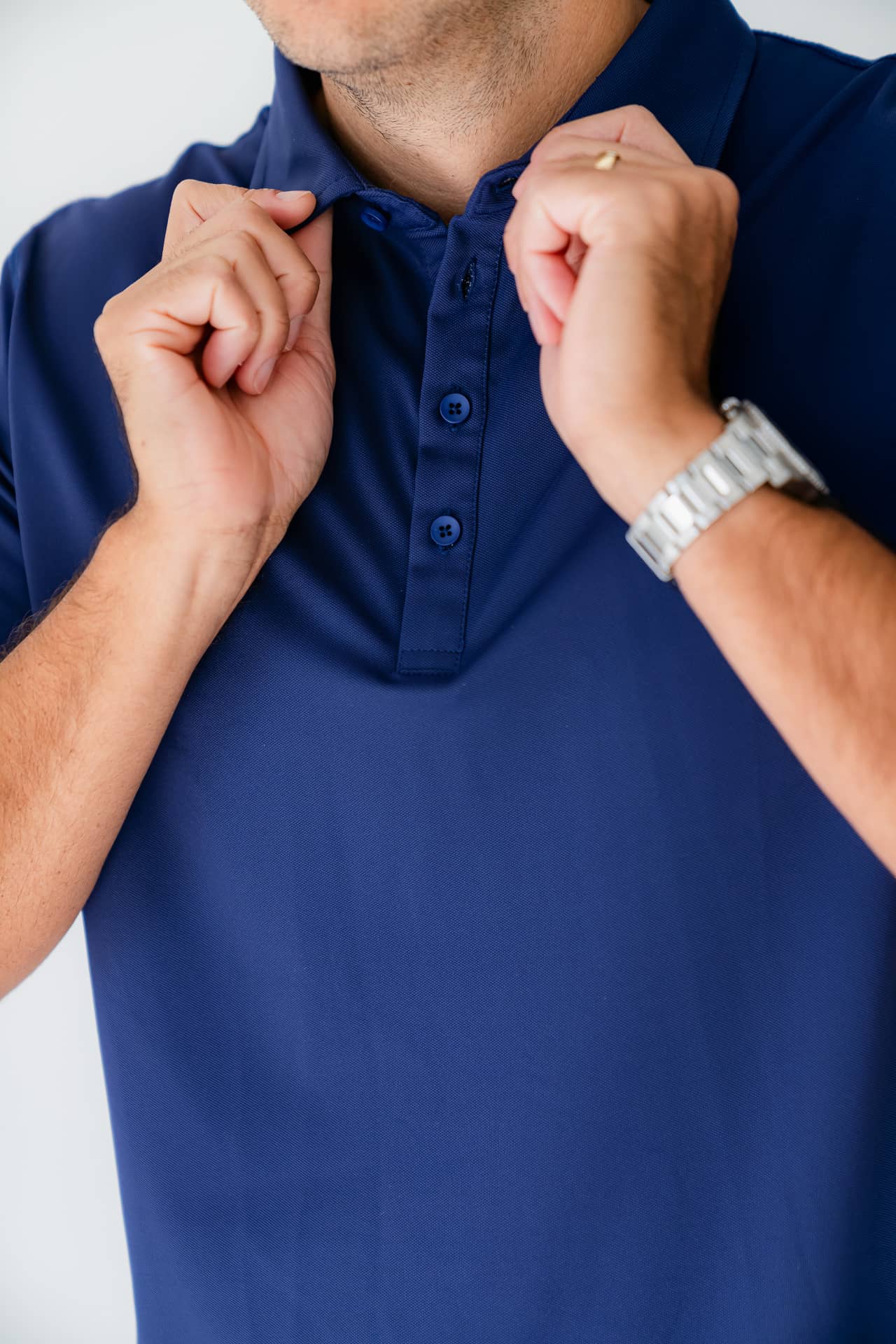
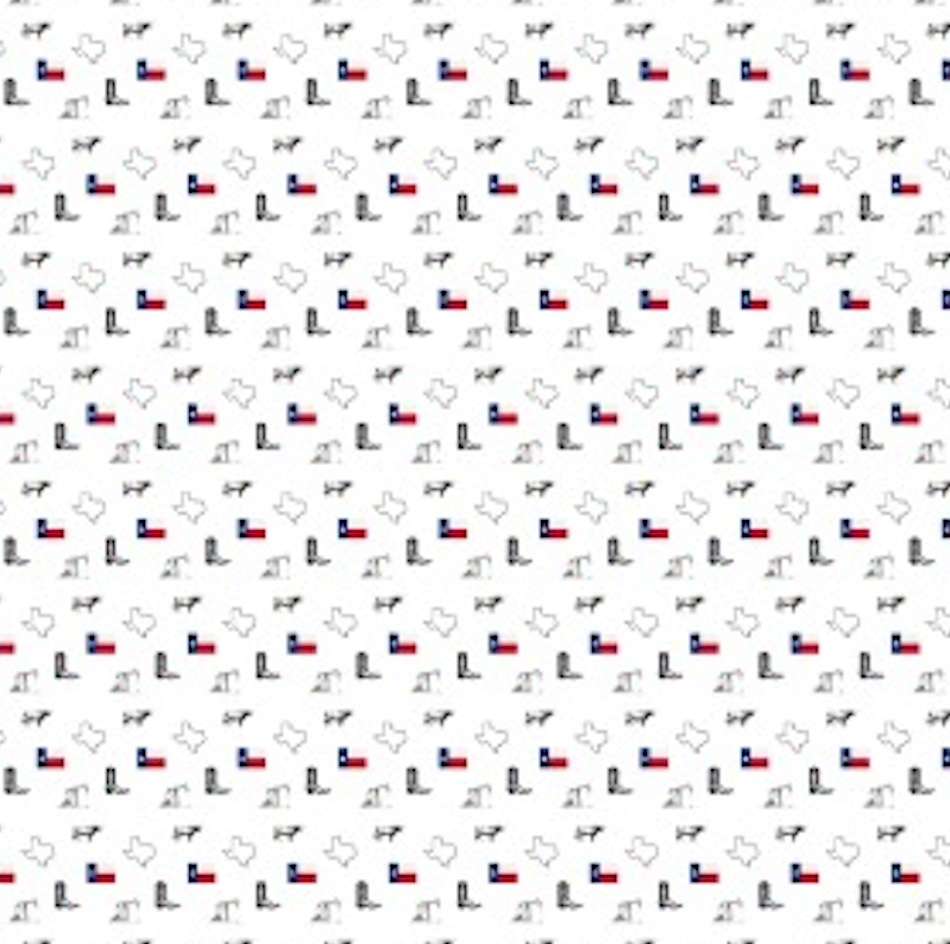
Left, the David Polo collar and placket, the structure an iron cannot add and can take away. Right, the Steven Polo Texas print at the scale it is knitted. Neither surface is a pressing job.
Pick on role, not on care, because the care is the same for both. The David is the solid you reach for without thinking. The Steven is the one with something to say. Either way the routine at the end of the day is a hanger.
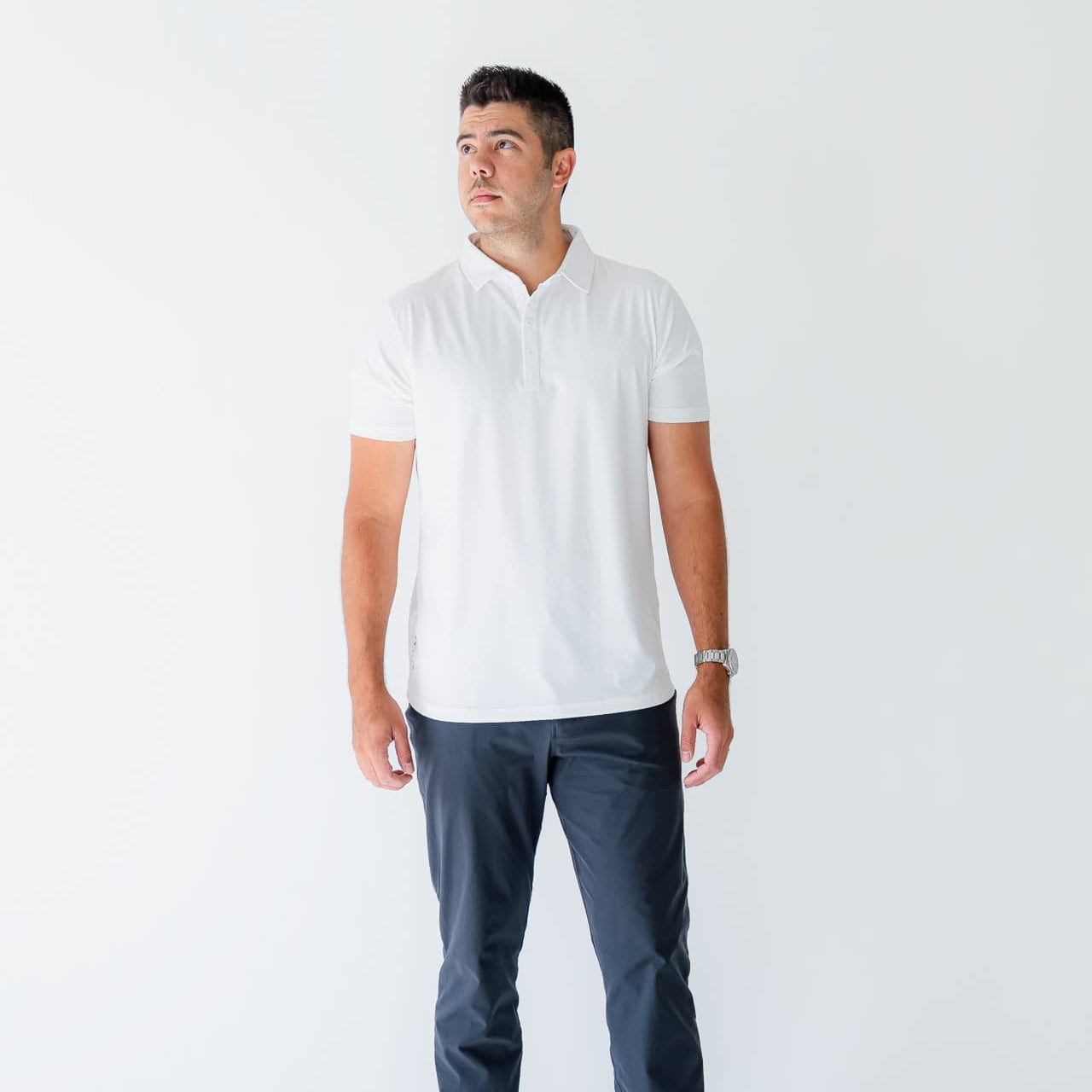
White
$76
The solid staple in white. 84 percent nylon and 16 percent spandex, four way stretch, sweat wicking, classic athletic fit, a firm collar that holds its shape, U cut hem, pre shrunk.
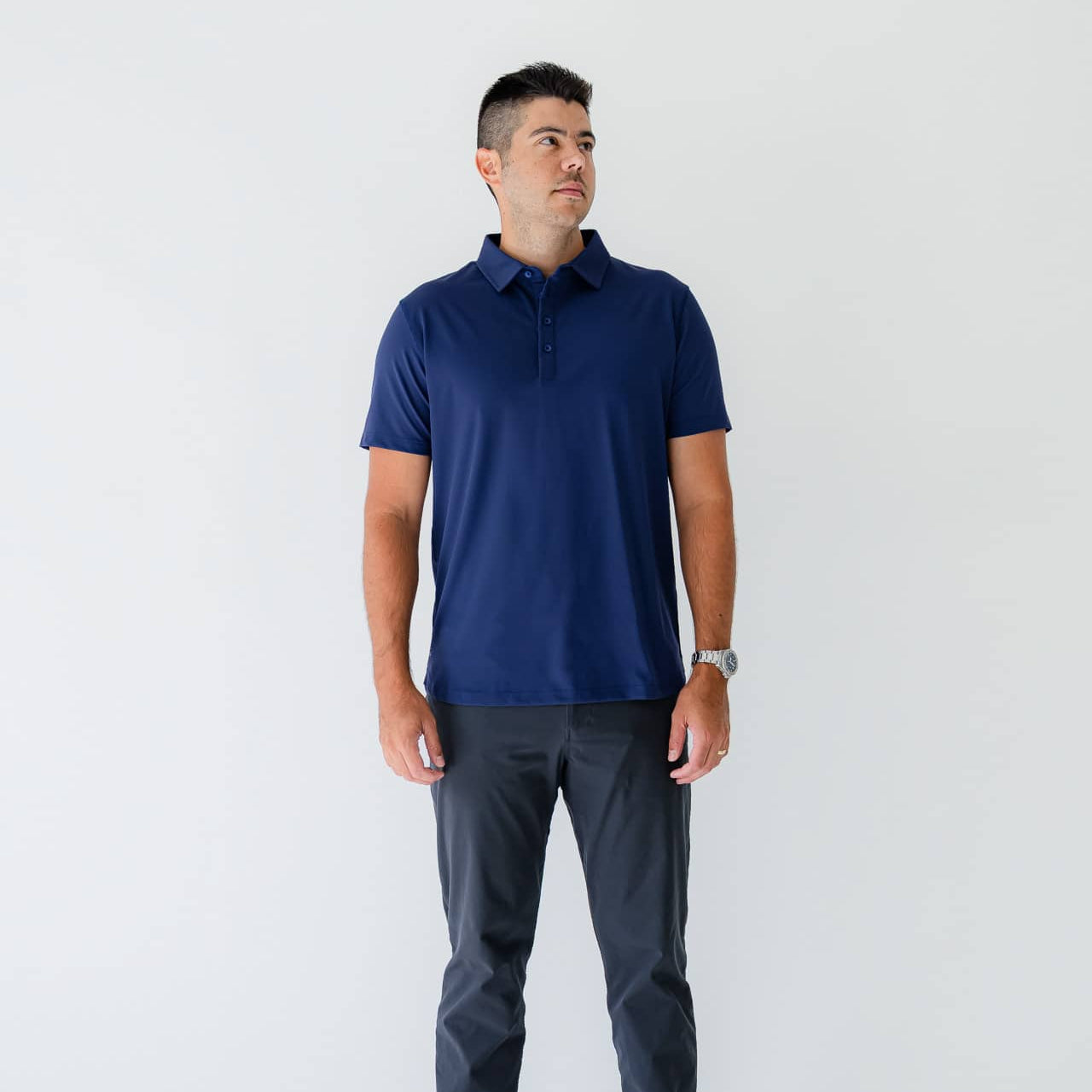
Navy
$76
The same solid staple in navy, the one that goes to dinner straight off the course. 84 percent nylon and 16 percent spandex, four way stretch, sweat wicking, U cut hem, pre shrunk.
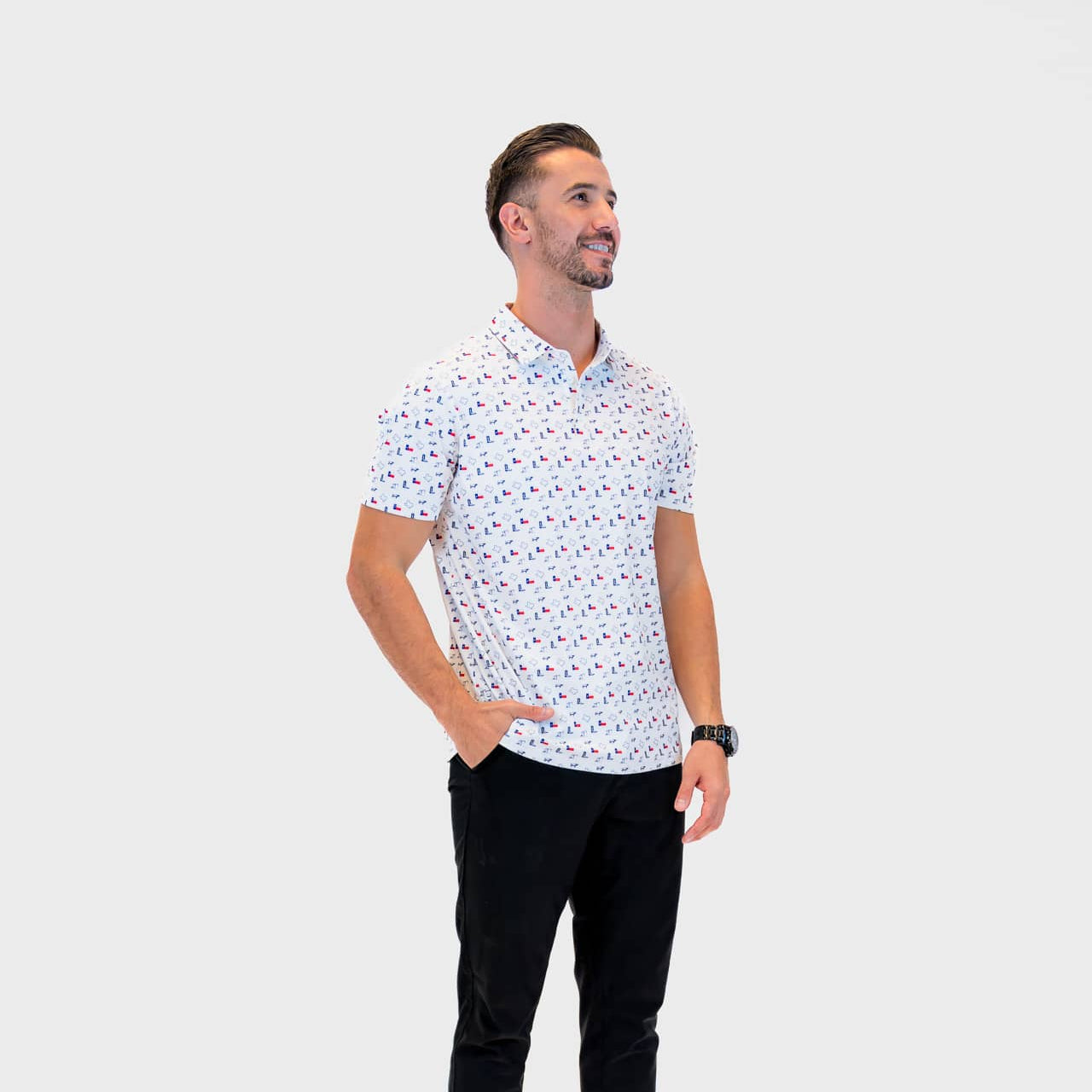
Texas print
$76
The print polo, in the Texas print. 88 percent polyester and 12 percent spandex in a cooling sweat wicking textured knit, four way stretch, classic athletic fit, U cut hem, pre shrunk.
The pair, David Polo White and Steven Polo Texas, $152.00
One solid that goes anywhere and one print that carries the day on its own, both pre shrunk knits, neither of which ever needs an iron. Pick your size and both land in the bag together.
Questions men actually ask about this
Can you iron a golf polo?
No, you should not iron a golf polo. A performance polo is a stretch knit and the spandex in it is more heat sensitive than the nylon or polyester it is blended with, so the iron costs you the shirt's recovery rather than the polyester. Hang it damp or steam it instead.
How do you get wrinkles out of a polyester golf shirt without an iron?
Hang it damp. Take it straight out of the wash onto a hanger with no dryer in between and let the weight of the water pull the knit straight as it dries. Shower steam is the next best option, and smoothing the body and hem gently while the shirt is still damp finishes it.
Will the crease come out of a performance polo on its own?
Yes, in most cases it will. A knit is loops rather than a grain, so a crease is held by the fabric rather than set into it, and it releases once the knit relaxes with a little moisture, a little weight or a little body heat. That is why a polo almost never needs pressing.
What do I do about a creased polo in a hotel room with no steamer?
Use the bathroom. Hang the polo clear of the spray, run the shower hot with the door shut and the fan off, take your shower, then move the shirt somewhere with air moving past it rather than back into the bag. For a sharper crease, wet the shirt in the sink, wring it gently without twisting and hang it over the tub overnight.
Is a handheld steamer safe on a performance polo?
Yes, as long as you hold it off the fabric. Steam does the work in the air, so keep the head away from the knit and keep it moving. Resting the steamer head against the shirt turns it into a small iron and puts you back in the same trouble.
How can I tell if I already ruined a polo by ironing it?
You will not see it, you will feel it. A polo with cooked elastane still stretches but stops coming back, so the sleeves start standing away from the arm, the hem starts to wave and the body begins to hang. It looks fine on the hanger and wrong by the third wear, and washing does not reverse it.
There is nothing on either shirt to press.
Pre shrunk knits, four way stretch, and no pressing job on either one. Hang them up and go play.
