

How to Spec and Size Branded Apparel for a Remote Team
Every shirt in this order will be opened in a different room, and in each of those rooms the person opening it is by himself. There is no break room table where the boxes all get torn open at once. There is no manager handing shirts across a desk, and there is no supply closet behind the order where a wrong size turns into a swap. The shirt lands on a kitchen table, gets held up at arm's length, and gets judged the way any shirt from any brand gets judged.
That one fact rewrites the whole spec. Search for apparel for a distributed team and you get swag kit vendors and gift kit catalogs, every result selling a box with a sticker on the lid. None of them answers the question actually in front of you, which is how to spec and size a real shirt for people you have never measured and then send it to a list of home addresses. The answer runs in the opposite direction from a floor uniform: better garment, smaller mark, and a size form built before a single order goes in.
Buy the better garment, shrink the logo, and collect sizes by brand and size printed on a label the employee already owns.
Decoration on stock garments runs 7 to 10 business days from proof approval. A garment built from the fabric up runs about 45 days door to door. On a distributed order the shipping leg to each address runs after whichever of those clocks you choose.
On this page
01
Each box opens alone, so the garment carries the order
A floor uniform gets graded against the uniform next to it. A shirt mailed to a home address gets graded against the closet it is about to join. Nobody is standing beside him to explain the program, so the fabric, the collar and the fit do all the talking. That is why a distributed order is the one company apparel buy where you should spend up at the garment and down at the decoration.
In practice that means a performance knit with real stretch, a collar that still stands after a wash, and a hem that sits straight when he is sitting down on a call. It also means a fit he recognizes. Most of the polos we keep in stock run a classic athletic cut, which is the shape a man who buys his own shirts already expects. If you want the spec written out rather than assembled piece by piece, start from the team polo program we spec and change what you need.
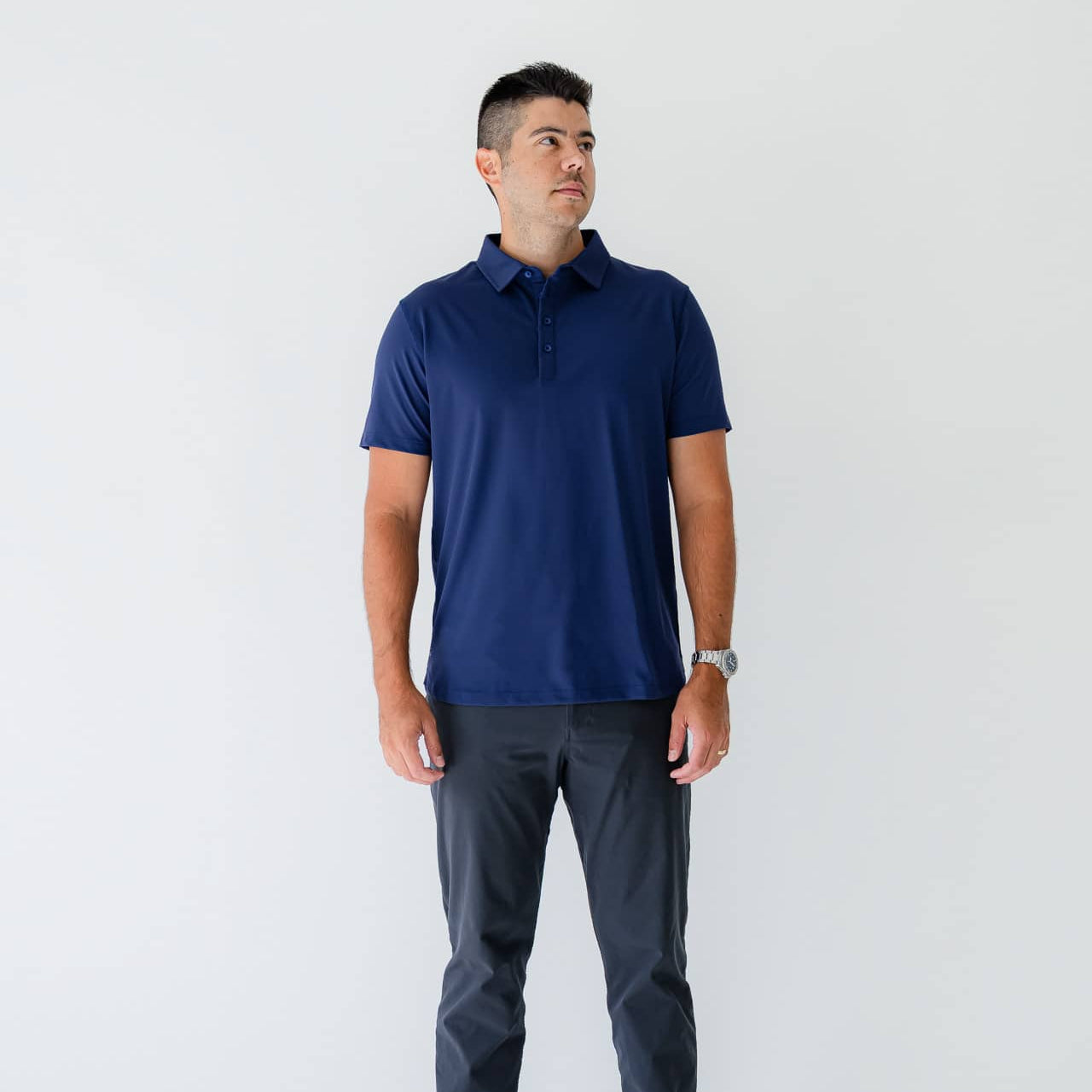
PILLAR David Polo, Navy
$76
84 percent nylon, 16 percent spandex. Four way stretch and sweat wicking. Classic athletic fit. A firm collar that holds its shape. U cut hem. Pre shrunk. Navy is the one that reads as a shirt first and a company shirt second.
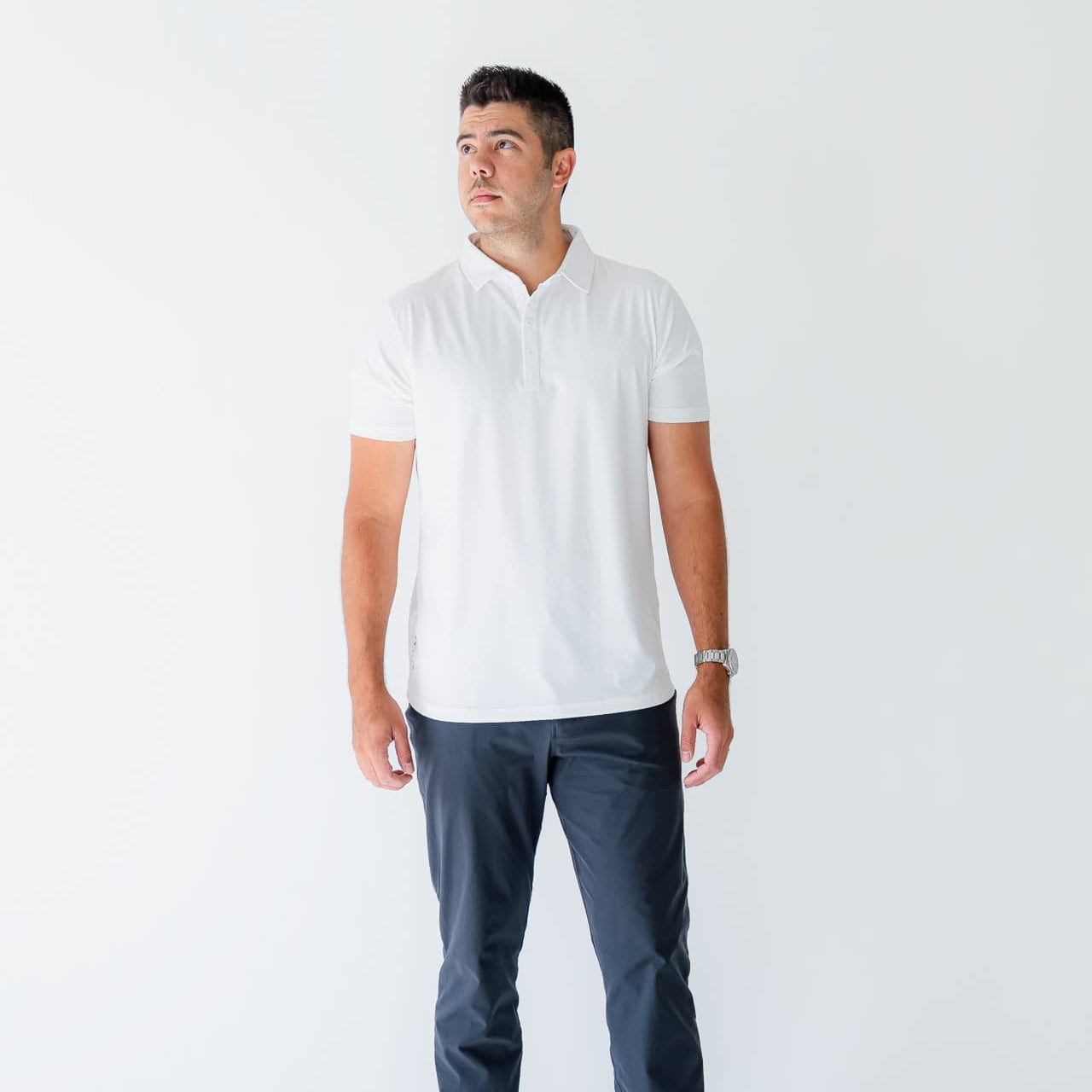
PILLAR David Polo, White
$76
Same construction as the Navy. Four way stretch, sweat wicking, classic athletic fit, firm collar, U cut hem, pre shrunk. White is the one to order when the mark is going on tonal and you want it to read quietly.
02
A woven label names the maker, so swag becomes product
The difference between a product and a giveaway is mostly what is printed inside the neck. A shirt with a real woven label gets hung up. A shirt with a blank or a wholesale tag gets folded into the drawer where the race shirts live. On a distributed order you never get to make that case in person, so you make it on the label.
We argued the whole thing out already in the piece we published on woven neck labels, which is worth reading before you sign off on a spec. The short version is that a woven neck label tells the person wearing the shirt who made it, and that changes how he treats it. The same logic carries through the rest of the package: private label neck tags, trim and detail work, branded insert cards, and name level kitting so each box is packed for one person and arrives with his name on it rather than a count on a carton. That is the same program behind work PILLAR has produced for AO, the WM Phoenix Open and Progressive Roofing, run at a scale of one box per person.
03
Employees report their own sizes, so the form comes first
Write the form before you write the purchase order. On a distributed team the size data is the single input you cannot fix later, because there is no stock sitting behind the order to trade against. A letter on its own is useless across brands, and a man guessing his own size in a field marked Size will guess high roughly every time. Ask him instead for a shirt he already owns and the size printed in it. Our longer walkthrough on sizing a company polo order covers the conversion work. These four questions are the ones to answer before you collect a single size.
- The brand already in his closet
- Ask for one polo he owns and wears, the brand on the label, and the size printed in it. A size in a named brand is a measurement. A letter in a blank field is a guess. Convert from the brand, not from the letter.
- Trim or relaxed, in his words
- Two men wearing the same size want different amounts of room. Ask whether he wants the shirt closer to the body or easier through the chest and waist, then hold that answer against the fit of the garment you picked. A classic athletic cut suits the first answer better than the second.
- The name and the address as he writes them
- Collect the shipping address and the spelling of his name in the same field set as the size. Name level kitting only works when the name is right, and a package returned from a stale address costs you the shirt and the clock together.
- The date the form closes
- Put a hard close date on the form and say what happens after it. An apparel order moves at the speed of the slowest reply, and on a remote team that reply can take a week to arrive. Close the form, then order.
04
The mark travels into his life, so it shrinks
No colleague will ever see this logo. It gets seen at a coffee shop, at a kid's game on a Saturday, and in a grocery line by people who have no idea what the company does. That inverts the floor uniform spec completely. A big chest hit works when the point is identification. Here the point is that he puts it on by choice, so the mark gets small and the garment gets good. A modest left chest crest, a tonal thread, or a sleeve hit instead of a chest hit. If the shirt would look wrong without the logo, the logo is not the problem.
This is the whole reason company shirts sit unworn, and we have written about the reasons a company shirt stays in the drawer at length. On a distributed order the stakes are higher, because an unworn shirt in a house you never visit is invisible to you. You will not find out.
04
This shirt competes with what is already in his closet, not with whatever the last company sent him.
So pick the two pieces that win that competition. A textured polo he would wear on a weekend, and a layer that has nothing to do with work at all.
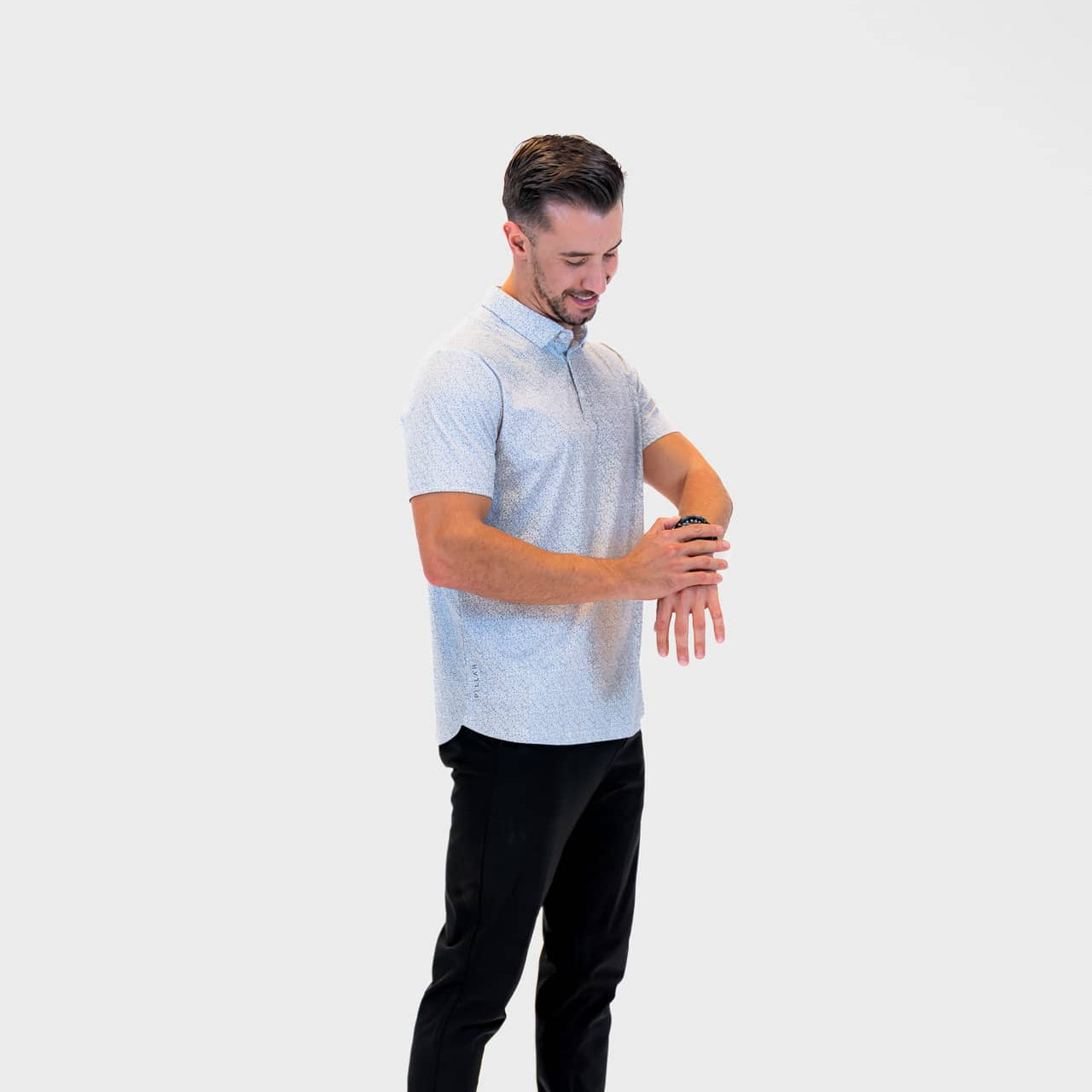
PILLAR Steven Polo, Brew print
$76
88 percent polyester, 12 percent spandex. Cooling sweat wicking textured knit. Four way stretch. Classic athletic fit. U cut hem. Pre shrunk. The print does the work the logo used to do, which is exactly the point.
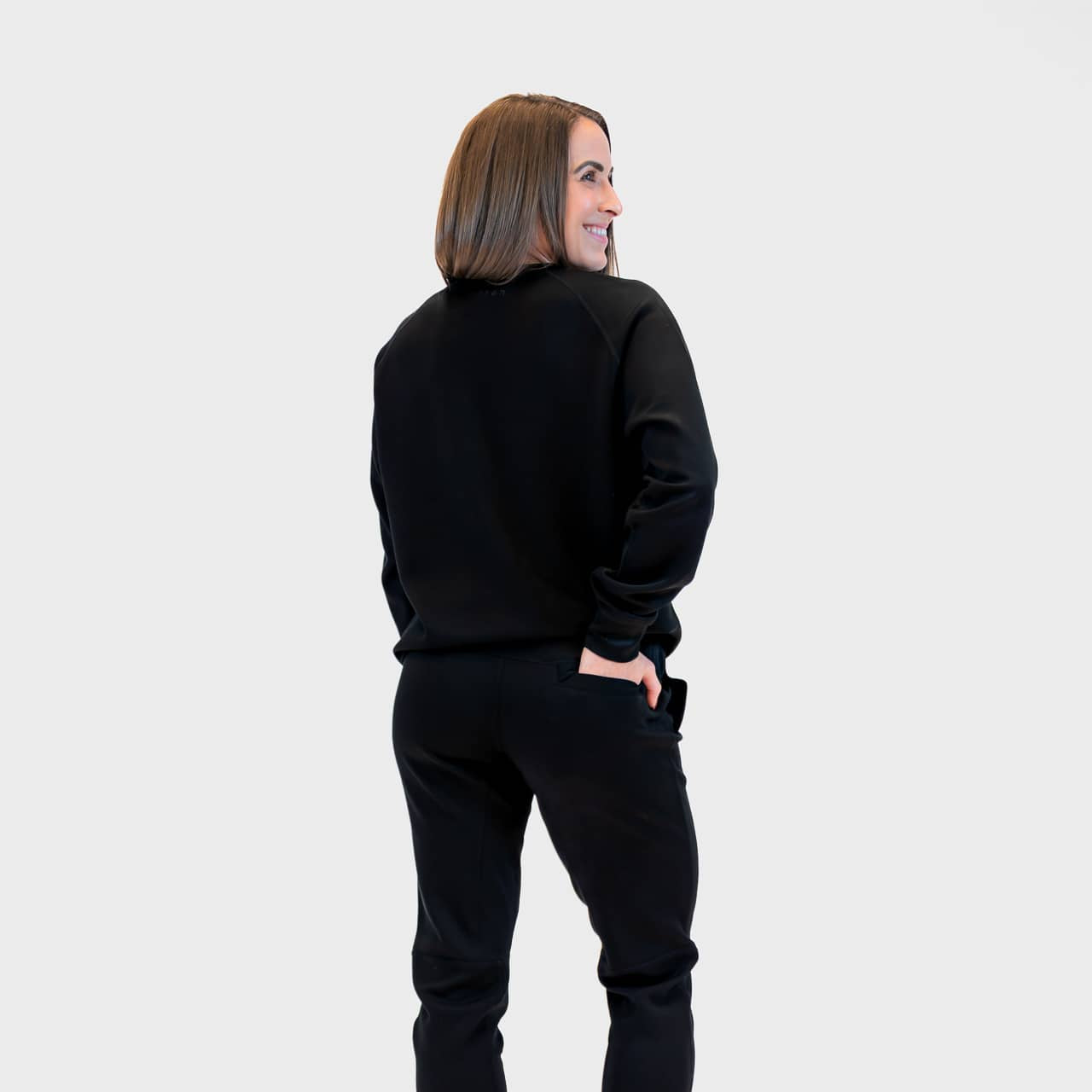
Alec Crew, Black
$85
The layer that crosses into his own wardrobe. Black, which is the colorway that stops being a company piece the second he pulls it on. This is the one that gets worn on days he is not working.
The two piece box, one click per size
David Polo in Navy plus the Alec Crew in Black. One polo for calls and one layer for everything else, which is the shape most distributed teams should send. The pair totals $161.00 per size. Pick the size and both pieces land in the bag together.
05
Packages scatter across addresses, so the clock changes shape
Decoration on stock garments runs 7 to 10 business days from proof approval. That is the number for logo embroidery run on stock garments, and it starts the day you approve the proof, not the day you send the art. Hold the proof for three days and the clock has not started yet.
Here is the part buyers forget to ask about. On a distributed order that decoration clock is only the first clock. The shipping leg to each individual address runs after it, and it is many small packages going to many addresses rather than one pallet going to one dock. Those packages do not all land on the same day, they do not all land in the same state, and a handful of them will need a second attempt. Build the order around the latest arrival, not the earliest. If the shirts have to be in hand for a fixed moment, the planning is the same as the work behind apparel that has to land on a start date, run once for every name on the list.
06
Yarn gets woven to spec, so the timeline stretches
The other option is a shirt built from the fabric up, and that runs about 45 days door to door. The fabric gets knit or woven to spec and dyed to an exact color, then cut, sewn, decorated and packed. All over print from an original repeat pattern lives here too, as do chenille, 3D puff, and applied graphics in reflective, tonal or metallic heat transfer.
Pick this path when the garment itself is the point, when the color has to match a brand standard exactly rather than approximately, or when you want a piece nobody else can order. Pick the stock path when the date is the constraint. Those two numbers belong to two different products, and anyone who quotes you one number for both is guessing. On a distributed order, add the shipping leg to home addresses on top of whichever one you choose.
07
Numbers describe a finished garment, so we withhold them
We will not publish a commercial laundering rating, a wash cycle count, a colorfastness grade, an abrasion result or a durability score for a garment that has not been built yet. Those figures belong to one specific construction, one specific dye lot and one specific finish, and none of the three exists until you approve the proof. Any number quoted before that point would be borrowed from a different shirt and dressed up as yours. The honest version is a physical sample in your hands with a spec sheet that matches it. Ask for the sample and judge the shirt instead of the claim.
08
Buyers ask the same questions, so the answers follow
How do you size a polo order for employees you never meet?
Ask each employee for one polo he already owns, the brand on the label and the size printed in it, then convert from that. A letter on its own means nothing across brands, and on a distributed order a wrong size is a dead shirt rather than a swap.
How long does logo embroidery on stock garments take?
7 to 10 business days from proof approval. On a distributed order that is only the first clock, because the shipping leg to each home address runs after it.
How long does a garment built from the fabric up take?
About 45 days door to door. That covers fabric knit or woven to spec and dyed to an exact color, then cut, sewn, decorated and packed.
Can you ship each shirt to the employee's home address?
Yes. Name level kitting means the order is packed by name, one box per person, with branded insert cards and packaging if you want them.
How big should the logo be on a remote team polo?
Smaller than you think. No colleague sees it, so a modest left chest crest, a tonal thread or a sleeve hit reads as a garment detail instead of a uniform marking.
Do you publish a wash rating or a durability score before production?
No. Those numbers describe a finished garment, and yours is not finished until you approve the proof. Ask for a sample and a matching spec sheet instead.
Sending one shirt to one person, and getting the size right the first time
Send the headcount, the two pieces you want and the date they have to be in hand. You get a spec, a proof and a clock that accounts for the shipping leg to every address.
